
Dinner
Award-Winning Barbecue Chicken
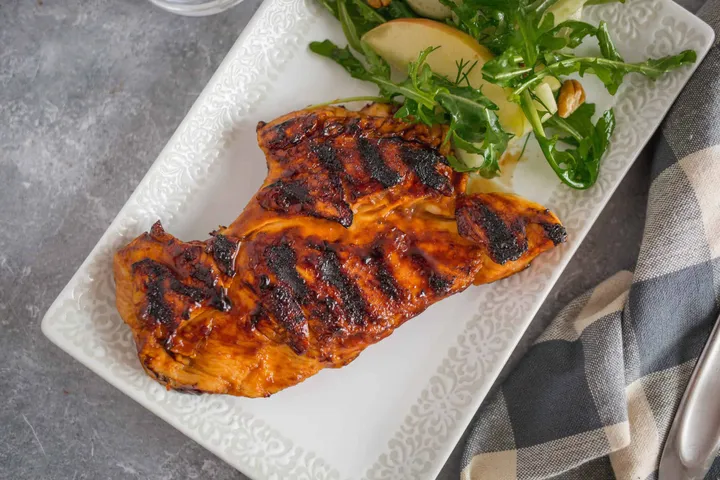
Award-winning barbecue chicken balances smoky, sweet, and tangy flavors with perfectly crisp skin.
This award-winning barbecue chicken boasts a melding of smoky, sweet, and tangy notes. Roasting garlic in its skin tames its harshness, transforming it into a subtle, caramelized paste that mingles beautifully with the rich oyster sauce. The aroma of black peppercorns hitting the hot skillet is a clue that something extraordinary is about to happen—sharp and bold, yet somehow comforting, like an old friend. As they smoke, their peppery bite mellows, offering warmth without overwhelming.
Onion caramelizing patiently in vegetable oil adds depth, bringing out sweetness that complements the sharpness of soy sauce and vinegar.
Gather folks around, and you'll find no need for fanfare; the enticing aroma is enough to bring everyone to the table, eager to savor each juicy morsel.
The breast halves I buy for the grill are boneless and skin-on.
For Saturday dinner, I put the sauce on raw chicken and it burns before the meat is done. I brush on the barbecue sauce only after the skin is crisp and the chicken is almost white throughout.
Jump to the recipe card for the ingredients and full directions.
For Saturday dinner, I put the sauce on raw chicken and it burns before the meat is done.
Why I brush on the sauce late
The very thick sauce sits on the surface of the chicken, where a medium-high grill can scorch it. Raw breasts need more time over that heat than the glaze does.
The skin gets crisp.
The sauce forms a glaze.
The breasts cook through.
Ingredient notes
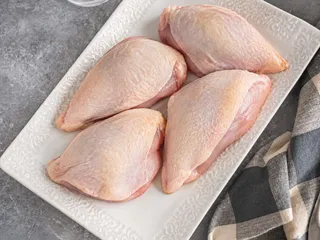
The skin-on chicken I buy
I buy boneless, skin-on chicken breast halves. The skin is the part that takes the first direct heat and turns crisp.
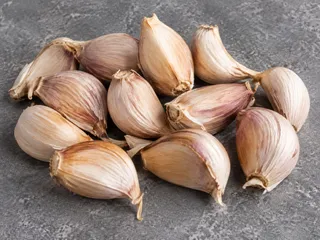
Garlic in its skin
I use unpeeled garlic cloves. Their skins stay on inside the foil, and only the soft roasted flesh belongs in the sauce.
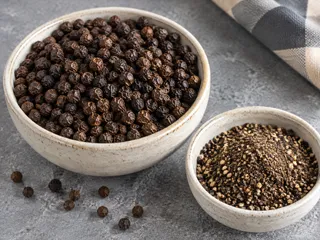
Whole black peppercorns
I start with whole black peppercorns. I want a coarse powder from the spice grinder, not a fine dust.
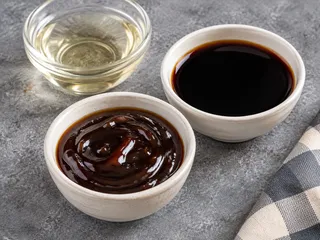
Oyster sauce and soy sauce
I use oyster sauce and soy sauce, not one in place of the other. The white wine vinegar brings tang to that concentrated base.
How I make it
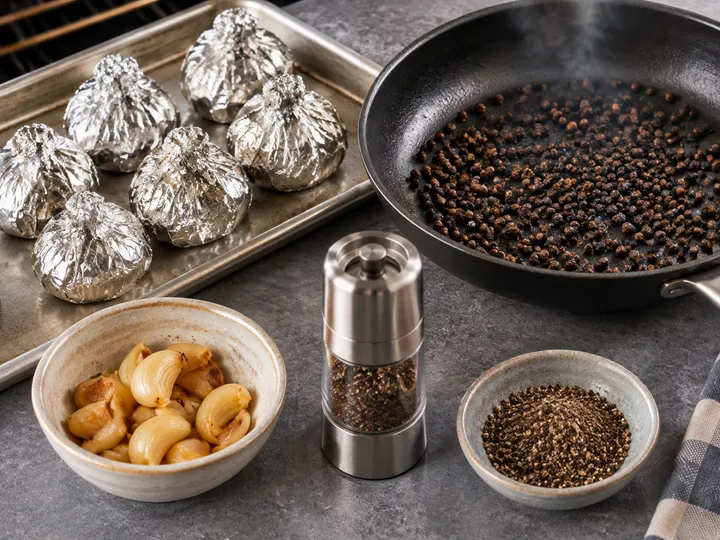
Set up the heat and aromatics.
I preheat the oven to 350 degrees F. I oil the grill grates, then preheat the grill to medium-high.
I wrap the unpeeled garlic cloves in foil and bake them until soft, about 30 minutes. I carefully squeeze the garlic out of its skins into a small bowl.
While the garlic roasts, I cook the peppercorns in a medium skillet over medium-high heat. I shake the skillet occasionally and stop when the peppercorns are smoking and fragrant, about 2 minutes. I transfer them to a spice grinder and let them cool completely before grinding them into a coarse powder.
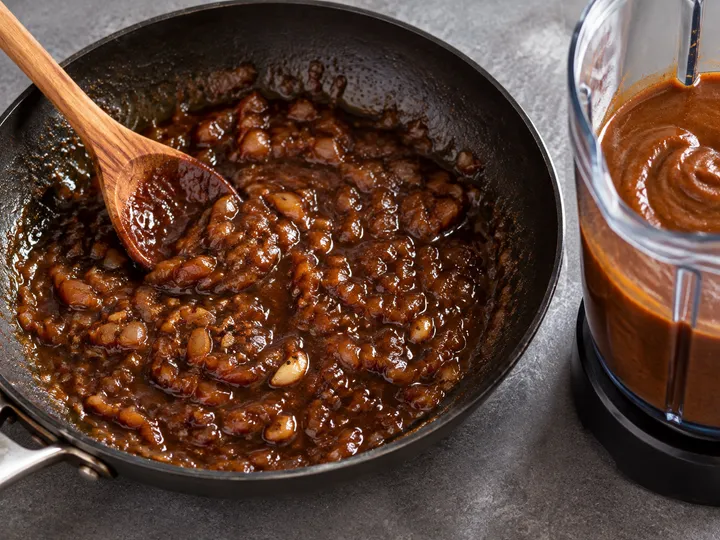
Reduce and smooth the sauce.
I lower the same skillet to medium heat and cook the onion in the vegetable oil until caramelized, about 10 minutes. I add the roasted garlic, coarse black pepper, and oyster sauce. I cook that mixture over medium-high heat for 1 minute while stirring.
I add the soy sauce and let it reduce by half, about 1 minute. I add the water and white wine vinegar, then simmer over medium heat until the sauce is very thick, about 3 minutes. I transfer it to a blender and purée it until smooth.
- AdvertisementIC-8
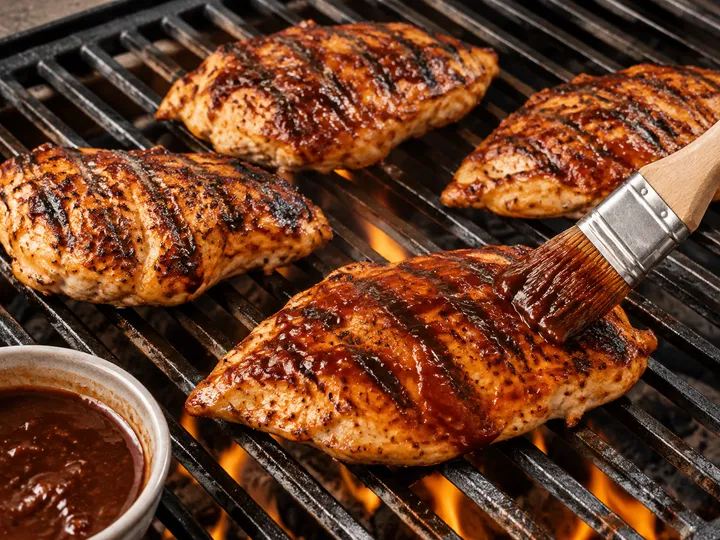
Crisp, glaze, and check doneness.
I start the breasts skin-side down on the grill and cook until the skin is crisp, about 7 minutes. I flip them and cook until each piece is almost white throughout, about 5 minutes.
I generously brush sauce onto the chicken, turn it, and grill until glazed, about 30 seconds. I generously brush the other side with sauce, turn it, and grill until glazed. I repeat the glazing once on both sides and keep grilling until a thermometer reads an internal temperature of 165 degrees F in each breast.
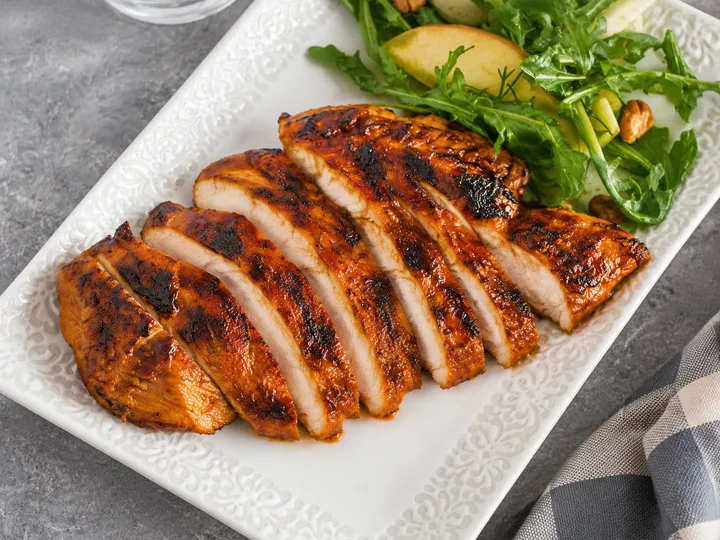
Rest, slice, and serve.
I transfer the chicken to a plate and let it rest for 5 minutes. Then I slice the breasts crosswise, plate them, and serve.
Award-Winning Barbecue Chicken
- Prep
- 40 minutes
- Cook
- 40 minutes
- Total
- 80 minutes
- Serves
- 4 servings
Ingredients
Directions
Notes
- The peppercorns cool completely before grinding.
- The soy sauce reduces by half.
- Rest for 5 minutes before slicing crosswise.
Tips and variations
- Wet skin takes longer to brown, so pat the breasts dry before they go onto the grill.
- A thin skillet can scorch the onion, so choose a heavy-bottomed medium skillet for steadier heat.
- Hot sauce can force a blender lid upward, so vent it according to the blender's instructions.
- A tight cover traps steam against the skin, so leave the resting chicken uncovered.
- Optional variation: If you prefer, you could use apple cider vinegar instead of white wine vinegar.
- Optional variation: If you have avocado oil, you could use it in place of the vegetable oil.
- Optional variation: If you want to reduce the salt from the soy sauce, you could use reduced-sodium soy sauce instead.
Leftovers
The chicken after grilling
Refrigerate leftover chicken in a covered container. Reheat gently under a cover until hot throughout; the skin will be softer than it was off the grill.
Make-ahead sauce
Make the sauce through the blender stage, then refrigerate it in a covered container. Warm it gently before use so the thick purée spreads again.
Questions
Can I put sauce on the raw chicken before grilling?
The thick coating can scorch before the center cooks through. The sauce comes after the skin is crisp and the chicken is almost white throughout.
Can I use color as the final doneness check?
The final check is an internal temperature of 165 degrees F, not color alone.
Do the peppercorns need to cool completely?
They need to cool completely in the spice grinder before the coarse grind.
Can I leave the sauce chunky?
The blender turns the cooked onion mixture into a smooth sauce for glazing.
Can I slice it as soon as it leaves the grill?
The breasts rest on a plate for 5 minutes before crosswise slicing.
Cooking notes
I used the thermometer instead of stopping at the almost-white stage. One breast still needed more heat to reach 165 degrees F.
The internal temperature is the final check for every breast.
I used a heavy-bottomed medium skillet for the onion. It colored evenly without catching.
I reheated a leftover breast gently under a cover. The skin was soft the second night.